AI SEO: How to Rank on Google & AI Search in 2026
Learn how AI is changing online discovery and how to make your website more useful, visible and understandable to Google and AI-powered search experiences.
Explore the 10 Strategies → Talk to BrandnexSearch Is Evolving. Is Your Website Ready?
Learn How to Rank on Google & AI Search in 2026 Because Digital marketing is changing as artificial intelligence reshapes how people find information, compare products and choose businesses. Search engines are no longer experienced only as lists of website links. AI-generated summaries and conversational tools can help people explore questions before they visit a website.
For businesses, this creates a new opportunity and a new challenge. Ranking in Google remains important, but brands should also publish useful information that search engines and AI systems can understand, verify and potentially reference.
This is where AI SEO, Answer Engine Optimization (AEO) and Generative Engine Optimization (GEO) come in. They build on traditional SEO with a stronger focus on helpful answers, credible sources, clear structure and genuine expertise.
What Is AI SEO?
AI SEO refers to using artificial intelligence to support search engine optimization, including topic research, keyword discovery, content planning, technical audits and performance analysis. In the context of AI-powered search, it also means making content clear and credible enough to be considered by systems that generate answers.
Traditional SEO helps search engines discover, understand and rank web pages. AEO focuses on directly answering user questions, while GEO focuses on improving the chance that content or a brand is referenced in generative AI responses.
| Approach | Main focus | Example |
|---|---|---|
| SEO | Search visibility and relevant website traffic | A page ranking for “digital marketing agency in Ghaziabad” |
| AEO | Clear answers to specific questions | A concise answer to “What is local SEO?” |
| GEO | Being understood or referenced in AI-generated answers | A useful guide being cited in an AI response |
These approaches work together. GEO and AEO do not replace the fundamentals of technical SEO, helpful content and a good user experience.
How AI Is Changing Search
AI-powered search experiences can summarize information, compare options and respond to follow-up questions. This may answer some searches without a website visit, while other users still click through to read detailed guides, check sources or make a purchase.
AI-generated answers
Summaries can appear alongside conventional search results. Accurate, well-organized source material helps systems understand a topic.
Conversational discovery
Users increasingly ask detailed questions and refine them through follow-up prompts, rather than relying only on short keywords.
Zero-click searches
Some users get what they need directly on a results page. Businesses should measure qualified traffic, conversions and brand visibility—not clicks alone.
Multiple discovery channels
Search, social media, reviews, video and reputable third-party mentions can all contribute to how customers discover a business.
The Core Pillars of AI SEO
Topical authority
Cover a subject thoroughly with a main guide and supporting articles that answer related questions. Link relevant pages together naturally.
Experience and credibility
Include real examples, clear author information, reliable references, transparent methods and first-hand insights wherever possible.
Structured, extractable information
Use descriptive headings, concise definitions, useful lists and comparison tables. Add relevant structured data only when it accurately describes the page.
Helpful original content
Go beyond generic explanations. Include practical steps, original analysis, examples and answers that genuinely help the reader.
Brand reputation beyond your website
Earn authentic reviews, relevant mentions and relationships in your industry. Never buy fake reviews or create spammy mentions just to influence AI.
Old approach: optimize a page for a keyword. Stronger approach: build a helpful, trustworthy resource that deserves to be found.
What Is Generative Engine Optimization (GEO)?
Generative Engine Optimization is the practice of improving content so that generative AI systems can understand it and may reference or mention it in their answers. It complements SEO rather than replacing it.
Imagine someone asks an AI assistant, “What should a small business look for in an SEO agency?” The system may summarize several sources and mention examples. A detailed, transparent guide that explains evaluation criteria and supports its claims with evidence has a better chance of being useful than a page filled with vague marketing language. However, no content format guarantees inclusion.
SEO earns discoverability
Help search engines crawl, index and understand useful pages, while meeting the needs behind a search query.
GEO supports AI visibility
Make information clear, specific, credible and easy to verify so it can be considered in AI-generated responses.
10 AI SEO Strategies to Improve Website Visibility in 2026
Write for clarity and extractability
Answer the main question near the beginning, then explain the evidence and details. Use meaningful headings, short paragraphs, lists and comparison tables. Keep the writing natural rather than forcing keywords into every sentence.
Build topical authority with content clusters
Create one comprehensive pillar page and supporting articles on related questions. For an SEO agency, topics might include local SEO, technical audits, keyword research, Google Ads and conversion optimization. Interlink pages where it helps readers.
Demonstrate experience and transparency
Add author bios, real case studies, dates where relevant, reliable sources and a clear explanation of how you reached a conclusion. Do not invent clients, results, credentials or research.
Keep your brand information consistent
Use the same business name, contact details and description across your website and legitimate business profiles. Maintain accurate organization information and use structured data that matches visible content.
Earn relevant third-party mentions
Share useful insights on appropriate industry platforms, publish expert commentary and encourage honest customer reviews. Repurpose original research into social posts, short videos and professional discussions without spamming communities.
Publish original data and examples
Use your own surveys, anonymized project findings, experiments, calculators or benchmarks when you can collect reliable information. Explain the sample, method and limitations so readers can evaluate the results.
Target conversational questions
Research how customers phrase their problems. Include relevant questions such as “How can a local business improve Google visibility?” Answer each question accurately and avoid creating repetitive pages for tiny keyword variations.
Prioritize people-first content
AI can help with brainstorming, research and outlines, but people should verify facts, improve originality and add expertise. Avoid publishing large volumes of repetitive content created mainly to manipulate rankings.
Strengthen technical SEO
Check indexing, broken links, redirects, canonical tags, page titles, mobile usability and loading performance. Make important pages accessible to search crawlers and use a logical internal-link structure. Review issues in Google Search Console.
Measure search and business outcomes
Track organic impressions, clicks, queries, conversions and technical issues. Where measurable, review referrals from AI platforms and monitor how your brand appears in a consistent set of relevant questions. Use multiple indicators instead of one unverified AI visibility score.
Best AI SEO Tools to Consider
The best tools depend on your goals, skills and budget. Start with reliable measurement tools before paying for multiple subscriptions.
| Tool | Useful for | Practical tip |
|---|---|---|
| Google Search Console | Search queries, clicks, impressions and indexing | Review pages and queries regularly. |
| Google Analytics | Website engagement and conversions | Configure meaningful conversion events. |
| Google Keyword Planner | Keyword ideas and advertising estimates | Validate search intent and competition. |
| Semrush / Ahrefs | Keyword, backlink and competitor research | Use findings to guide research, not copy competitors. |
| Screaming Frog SEO Spider | Technical crawling and site audits | Check broken links, titles and duplicate issues. |
| ChatGPT / Gemini | Research assistance, outlines and question discovery | Fact-check important claims and add human expertise. |
How to Measure AI SEO Performance
AI search reporting is still evolving, so use a balanced measurement plan. Establish a baseline and review progress over time instead of expecting instant results.
- Organic search: impressions, clicks, relevant queries and landing pages in Google Search Console.
- Business results: qualified enquiries, calls, form submissions and sales in your analytics system or CRM.
- Technical health: indexing coverage, crawl problems, mobile usability and page performance.
- AI visibility: test a fixed set of relevant questions across selected platforms and record brand mentions, cited URLs and competitor appearances.
- Reputation: monitor genuine customer feedback, relevant brand mentions and the accuracy of your business information.
Frequently Asked Questions
1. What is AI SEO?
AI SEO uses AI tools to assist with research, content planning, optimization and analysis. It also involves preparing useful, clear content for modern search experiences, including AI-generated answers.
2. Can AI SEO help a website rank on Google?
AI tools can make SEO workflows more efficient, but rankings depend on relevance, quality, competition, technical health and many other factors. No tool or agency can guarantee a specific position.
3. How can my business appear in ChatGPT or Gemini answers?
Publish accurate and useful content, strengthen your website and brand credibility, keep key pages accessible to search crawlers, and build a trustworthy online presence. Inclusion in AI answers cannot be guaranteed.
4. What is the difference between SEO, AEO and GEO?
SEO improves visibility in search engines, AEO emphasizes answering questions clearly, and GEO focuses on making content understandable and potentially referenceable by generative AI systems. The approaches overlap.
5. Is AI-generated content good for SEO?
AI-assisted content can be useful when it is accurate, original, helpful and properly reviewed. Publishing mass-produced content mainly to manipulate rankings can conflict with search engine spam policies.
6. How long does AI SEO take to show results?
There is no fixed timeline. Results depend on your website's current condition, competition, content quality, authority and the work required. Monitor progress over several weeks and months.
The Future Belongs to Useful, Trustworthy Content
AI is changing how people discover information, but the fundamentals of effective SEO remain valuable: understand your audience, answer real questions, maintain a healthy website and earn trust. Combine traditional SEO with clear content, responsible AI assistance, original insights and careful measurement.
Rather than chasing every new trend or publishing content for volume, build resources that help customers make better decisions. A consistent, people-first strategy can support both search visibility and long-term business growth.
Ready to Grow Your Business with Smarter Digital Marketing?
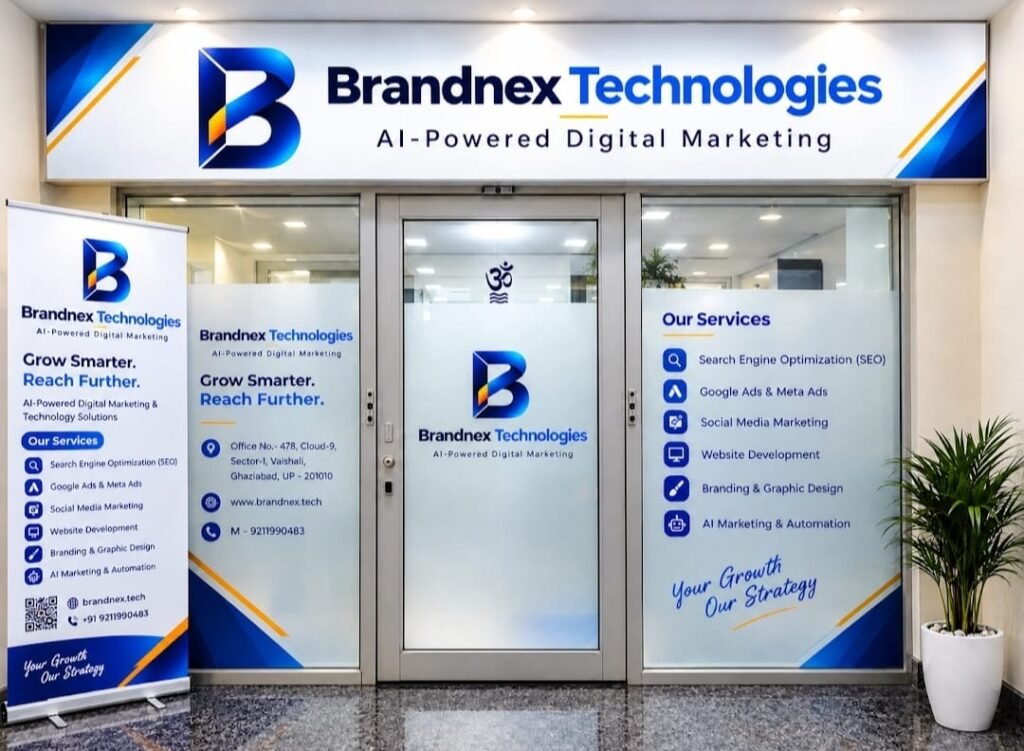
Want to improve your website visibility, attract relevant visitors and generate more enquiries? Brandnex Technology helps businesses build a stronger online presence through SEO, AI-assisted marketing, GEO and AEO strategy, Google Ads, social media marketing, content marketing, website development and marketing automation.
We combine practical strategy, creative execution and data-led improvement to help startups, small businesses and growing brands reach their target audiences.
Location: Ghaziabad, Uttar Pradesh, India
Visit Brandnex Technology → Message Us on WhatsAppSmarter Strategies. Stronger Digital Presence. Sustainable Growth.